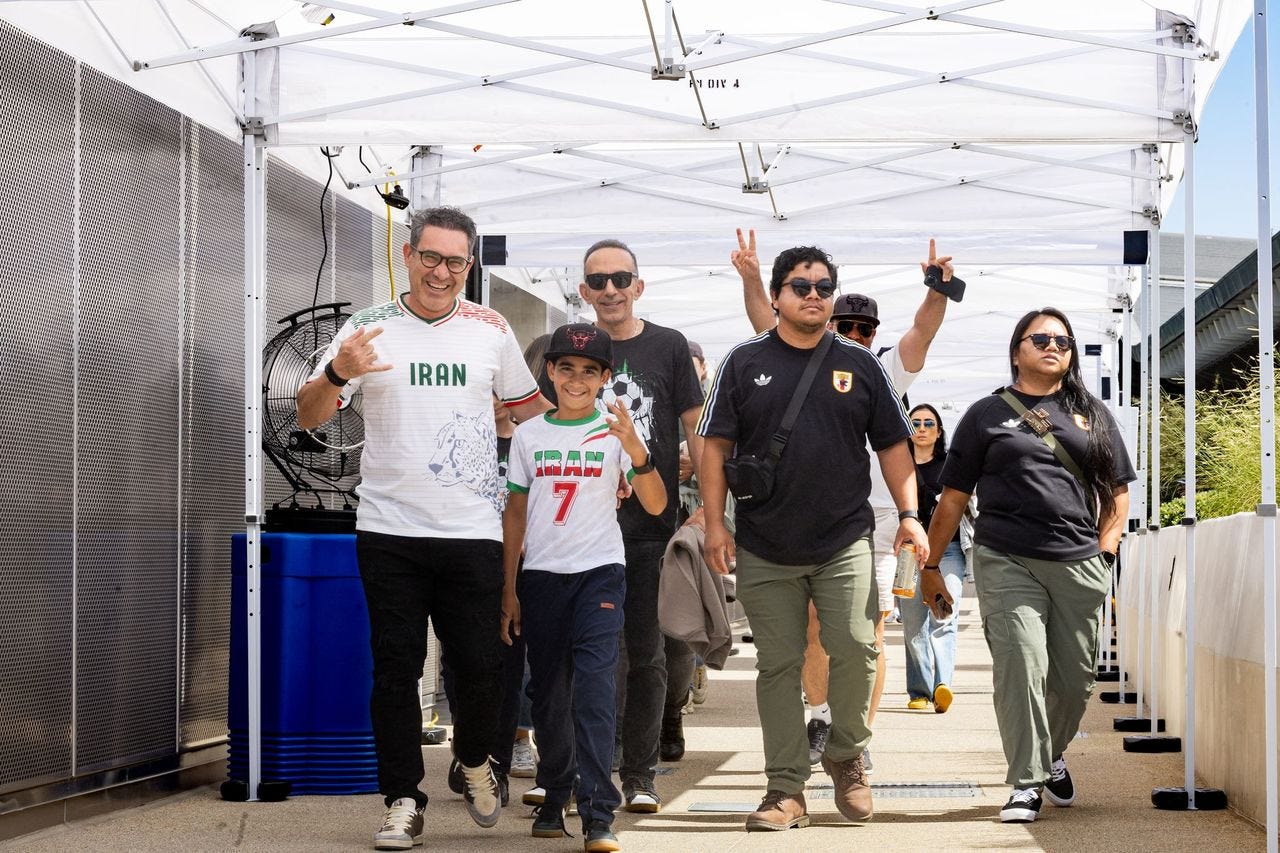
The Final Numbers Are In
Measuring our World Cup GETS Ridership

Earlier this week, I shared our June ridership numbers and the incredible year-over-year jump we saw, 2.4 million additional boardings. Today, we’re closing out the books on our Metro’s World Cup Games Enhanced Transit Service (GETS).
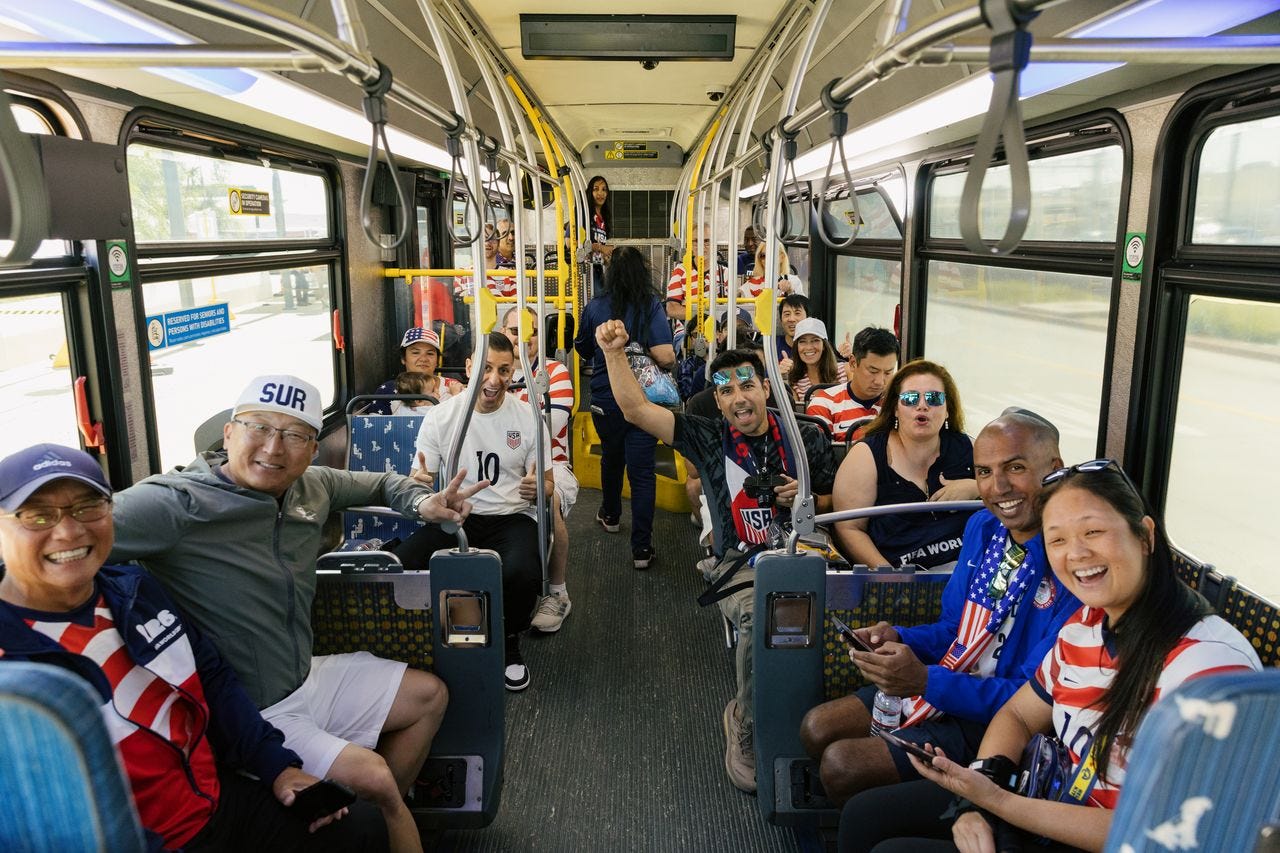
When we launched GETS, we knew we were taking on something we’d never done before. Fifteen shuttle routes, eight matches, hundreds of buses, thousands of employees, new technology, regional transit partners and months of planning. Now that the tournament is wrapping up, we can report the final numbers
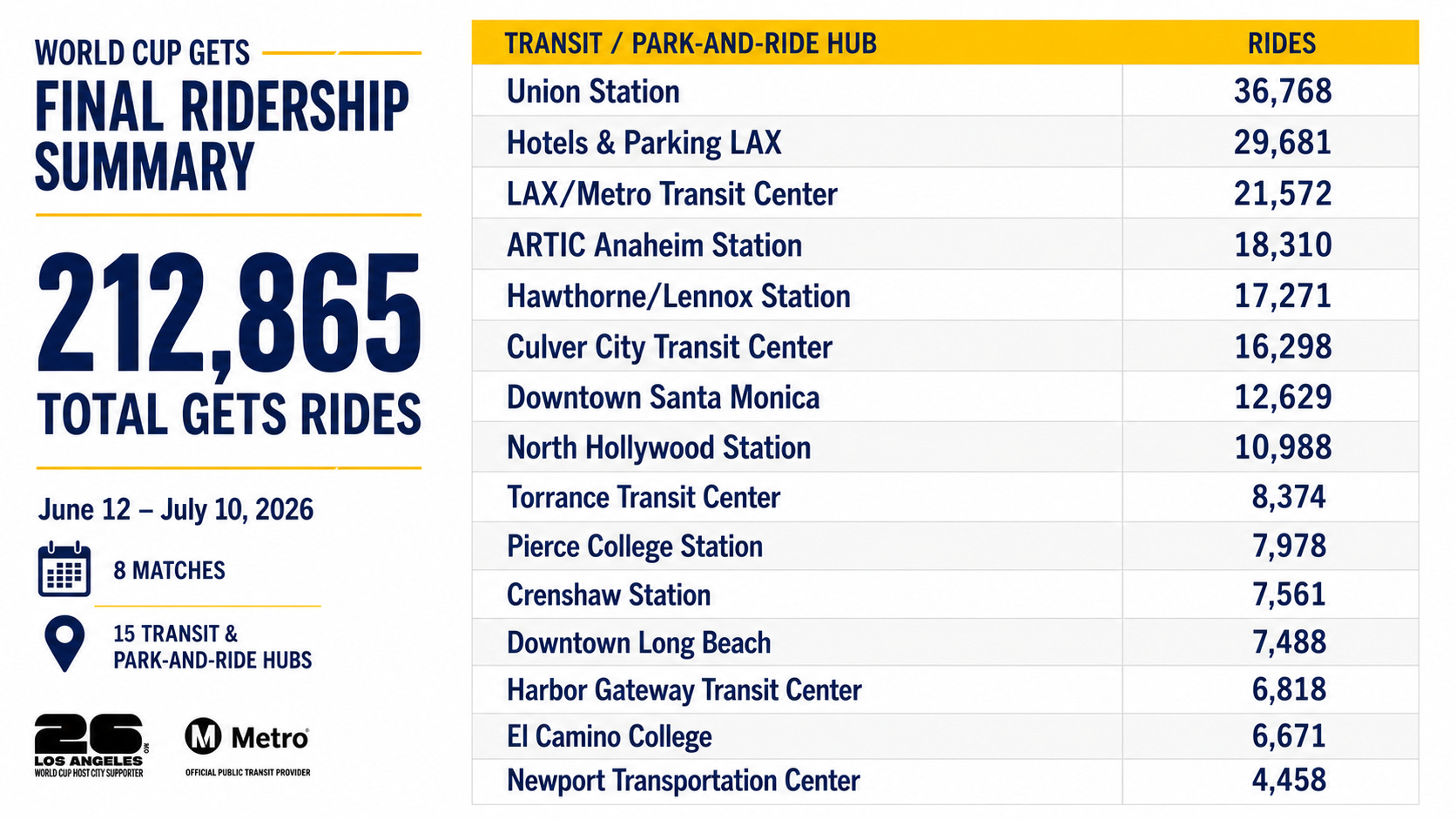
Once the final numbers came in, the most interesting detail was where people actually boarded the service. Union Station was our busiest shuttle hub, followed by the LAX hotel corridor and LAX/Metro Transit Center. In other words, Metro wasn’t just moving people to a soccer match. We were connecting airports, hotels, regional rail, neighborhoods and one of the world’s biggest sporting events into a single transportation network.
That pattern held up across 212,865 total trips on World Cup GETS, our dedicated shuttle service serving LA Stadium.
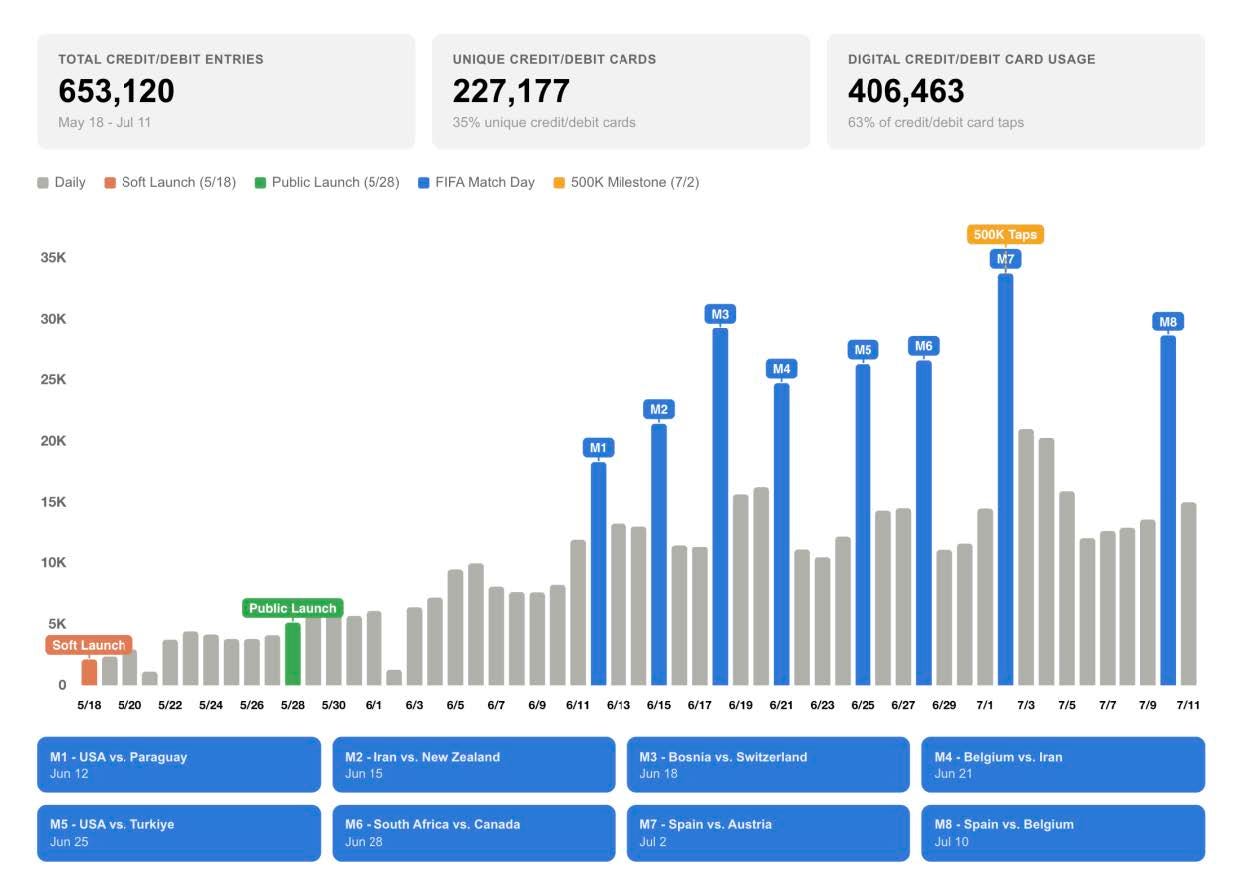
We were also able to see how Open Payment numbers tracked across all eight matches. On FIFA match days, tap-to-pay usage ran about 92 percent higher than on the surrounding non-match days, meaning riders chose to simply tap a credit card, phone or watch instead of purchasing a fare card at a rate we’d never seen before. That surge helped us hit a real milestone: 500,000 Open Payment transactions during the seventh match. By the last match in LA, Open Payment had reached nearly 650,000 transactions. We also saw thousands of fans purchase our commemorative World Cup TAP cards, many of which have become souvenirs of the tournament as much as fare media.
Throughout this series, I’ve written a lot about technology, the customer experience and reducing barriers to transit. Those investments seem to be paying off. But the numbers I really want to understand require a bit of a deeper dive.
For example, how many of those riders were trying Metro for the first time? How many were visitors discovering Los Angeles through transit and how many were Angelenos who just decided to leave the car at home because Metro seemed like the easier option?
And the most important question of all: How many of them will ride again?
Those answers will take a little longer to uncover as we work through rider surveys and additional data. I’m guessing that ultimately they might tell a more important story. Because the success of GETS isn’t measured only by how many people rode during the World Cup. It’s measured by whether we earned their trust to ride Metro again.
As we’ve said throughout this series, our goal was never only to move people to a match. It was to introduce more people to what Metro can be. And that was the opportunity the World Cup gave us.
If even a small percentage of those riders decide Metro works for more than just a World Cup match, then the success of World Cup GETS lives beyond the tournament.
It will continue every morning someone chooses Metro to get to work, every weekend someone rides to dinner or a concert, and every time someone asks, “Hey, should we just go Metro?”